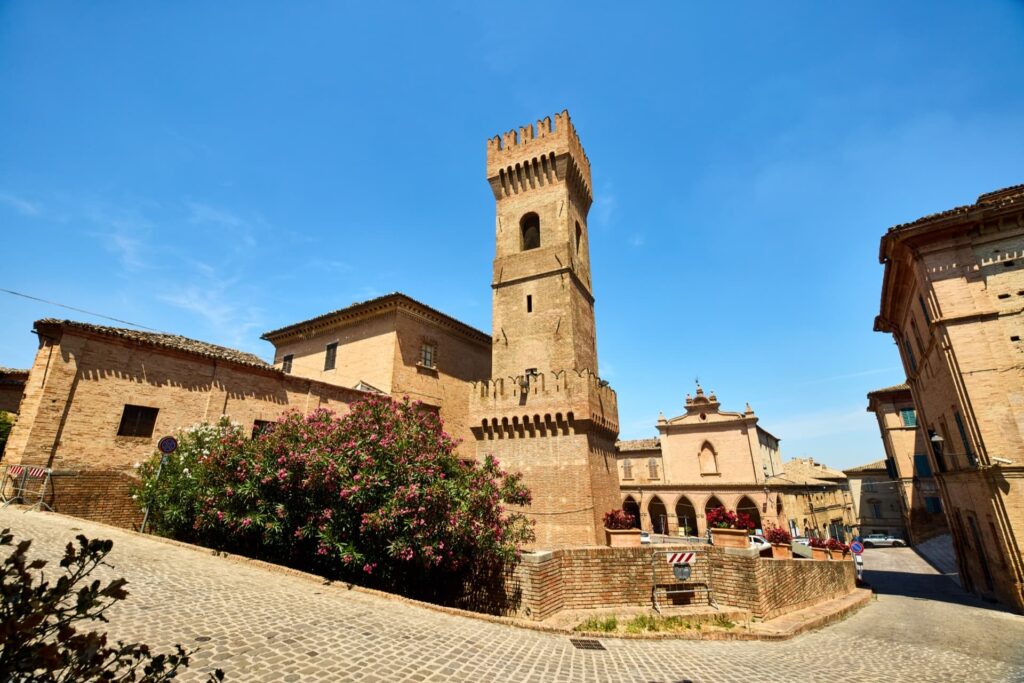
An interesting walking tour of Ostra, starting from the imposing city walls.
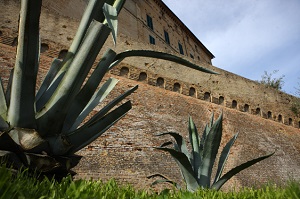
The Walls
The only defensive structure surrounding Ostra is the town wall. It is believed to have been built in the Middle Ages. It is approximately 1,200 metres long, is earth-filled and reaches a height of up to 10 metres. In some places, the thickness at the foundations reaches up to 3 metres. These are still interspersed with 9 towers, of which there were originally 12. The rampart was used as a walkway or, in the summer months, as a promenade for the town’s inhabitants.
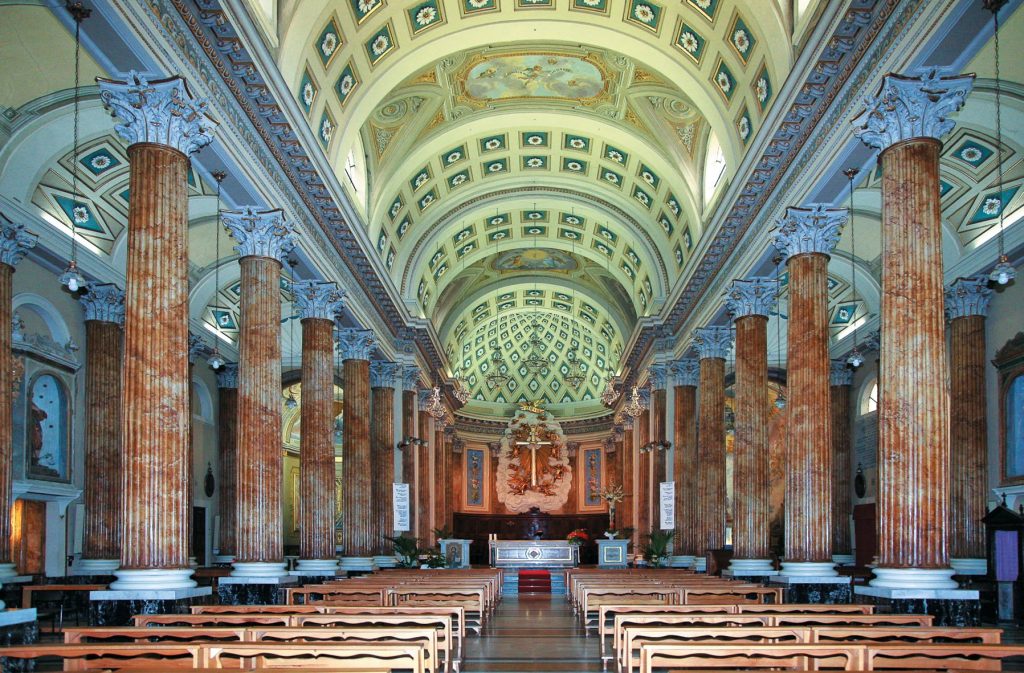
Basilica of Santa Croce
It is the main church in Ostra, a splendid example of Neoclassical architecture. Built after the year 1000, it was originally a Benedictine abbey.
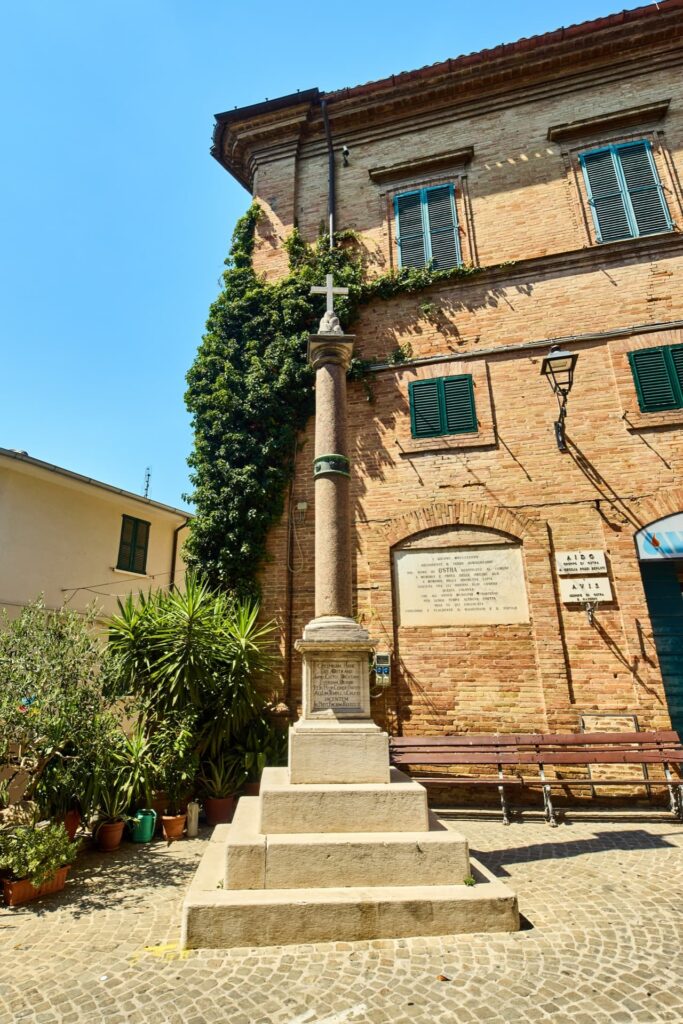
Monument to the name of Ostra
The ‘Monument to the Name and Coat of Arms of Ostra’ is a granite column from the ancient city of Ostra, located near the Basilica of Santa Croce. It is a historic monument commemorating the city’s Roman origins.
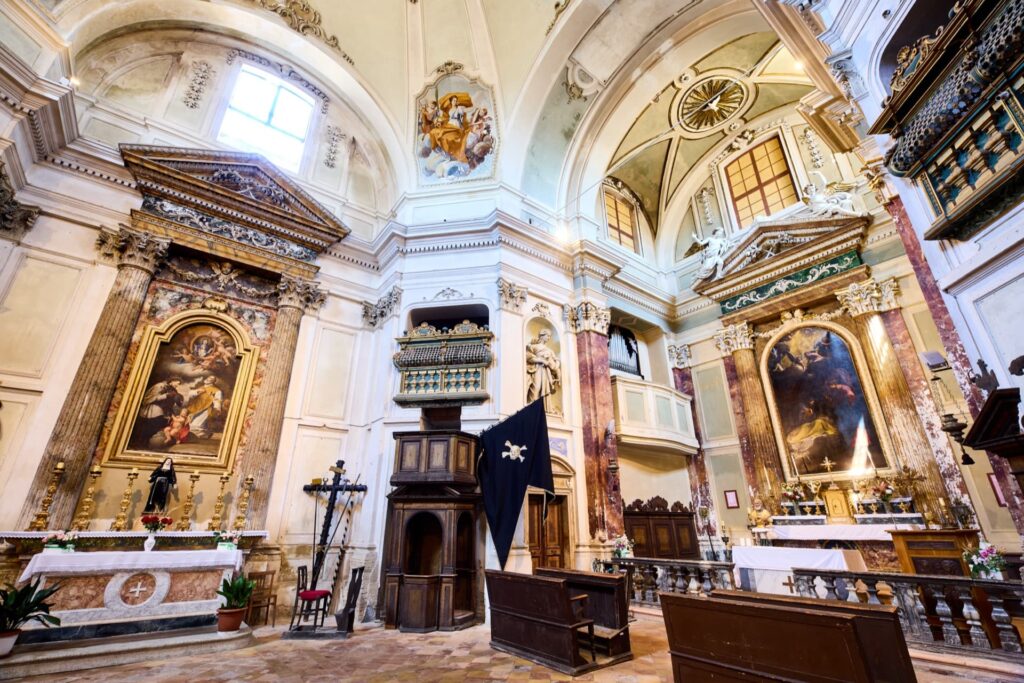
Church of Saints Giuseppe e Filippo
The Church of Saints Joseph and Philip Neri was built in 1781 by the Congregation of the Philippine Fathers, who had been invited to Ostra by the Confraternity of Death and Prayer, following the demolition of a pre-existing church that had fallen into a state of complete disrepair. From the entrance, which opens onto Via del Corso, one ascends a flight of about ten steps to reach the floor level of the single-nave church; once at the top, what strikes one most is the spaciousness, the brightness, the architectural simplicity and the harmony of the interior: a true jewel of sacred art.
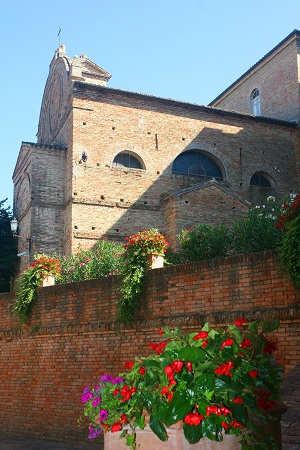
Church San Rocco
The original building dates back to 1527, but towards the end of the 18th century the Church of San Rocco was completely renovated. It houses paintings by Giovanni Brandi da Poli, from the workshop of Pietro da Cortona and, probably, from the workshop of Federico Barocci, as well as an organ dating from 1771 by the famous Paduan organ builder Gaetano Callido.
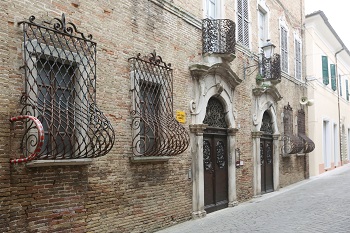
Noble Palaces
Along both sides of Corso Mazzini stand a number of stately mansions: Palazzo Gabuzzi Fedeli Luzi, Palazzo Sanzi Pericoli, Palazzo Cherubini and Palazzo Menchetti.
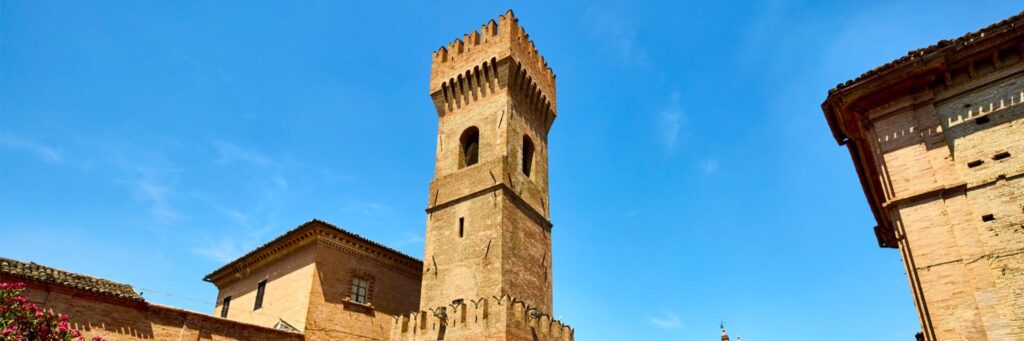
Martyrs' Square and Civic Tower
Piazza Martiri is located in the upper part of the historic centre, at the junction of Via del Teatro, Corso Mazzini and Via Gramsci. The square is surrounded by important public buildings, which bear witness to the historical and social significance of this space in the life of the community.
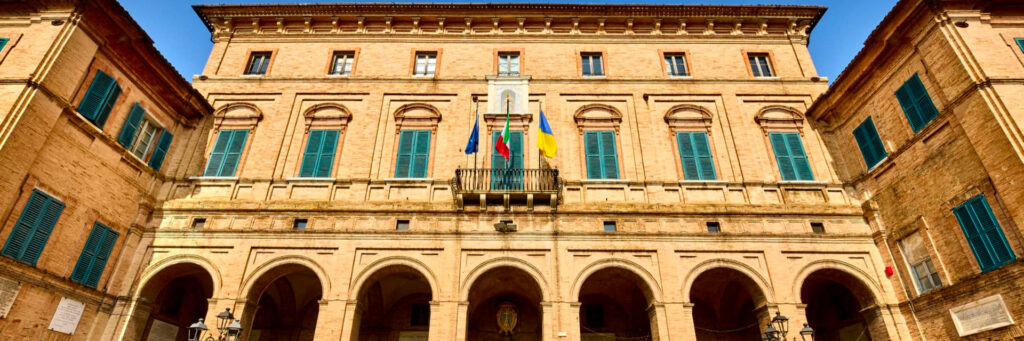
The Palazzo Comunale
The Town Hall, designed by the architect Antonio Maria Carbonari Geminiani, dominates the square onto which it overlooks. Its harmonious architecture, comprising a central section and two wings, is enhanced by a loggia featuring seven round arches.
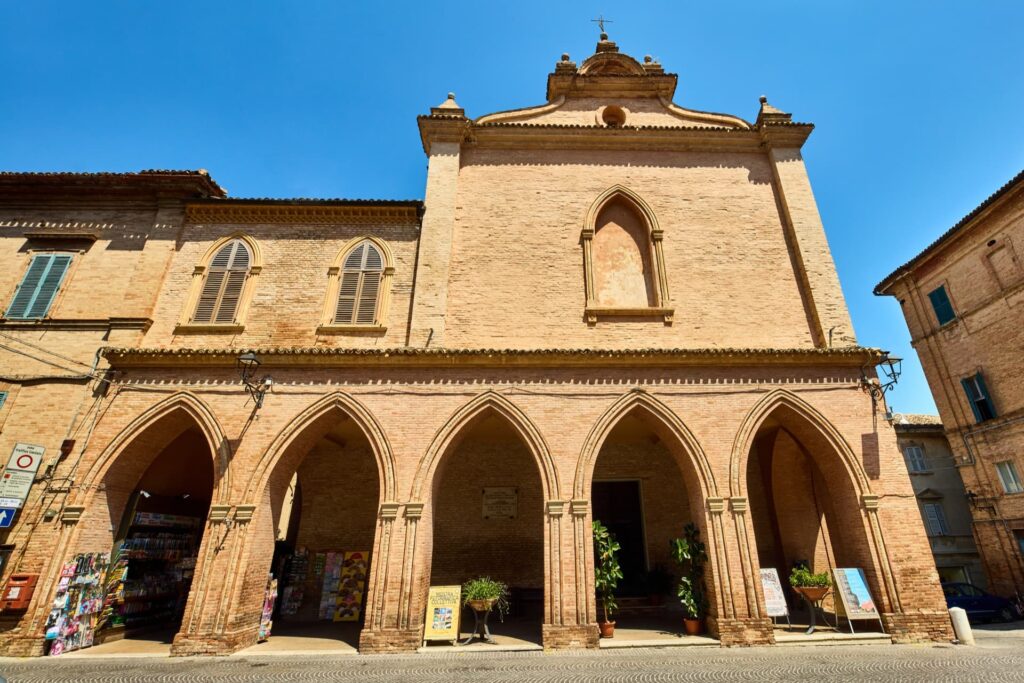
Church of Saints Francesco and Lucia
The church of Saints Francis and Lucy is mentioned for the first time in a testamentary document dated 1279; it was subsequently rebuilt in the first half of the 14th century under the patronage of the Town Council, which, whilst entrusting its care and administration to the Friars Minor Conventual, regarded it as an “Ecclesia Communis” and used it as a “second Town Hall”. The General Council and the Parliament held their meetings there. The ballot box and a cabinet containing the town’s most important documents were kept there. Official religious services were held there, at which the town councillors attended in their ceremonial robes.
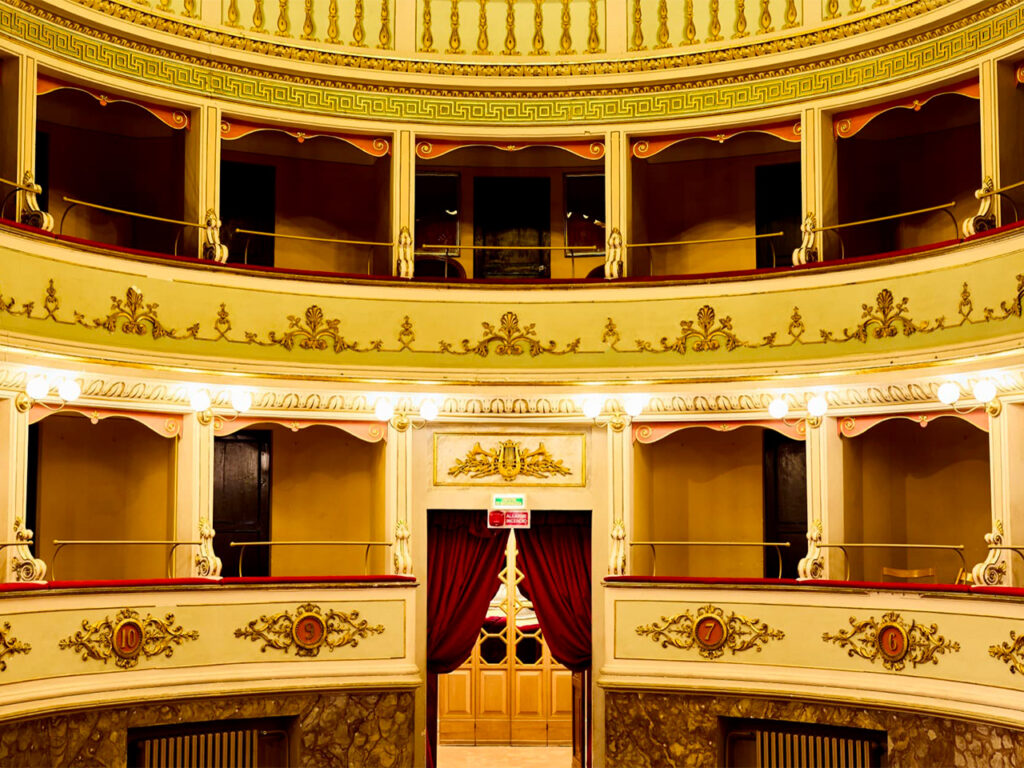
“La Vittoria” Theater
Built in the right wing of the town hall, which was erected in 1749 to a design by the architect Antonio Maria Carbonari Geminiani, construction of the present-day theatre, designed by the architect Francesco Fellini di Barbara, began in 1863 and replaced the previous 18th-century theatre
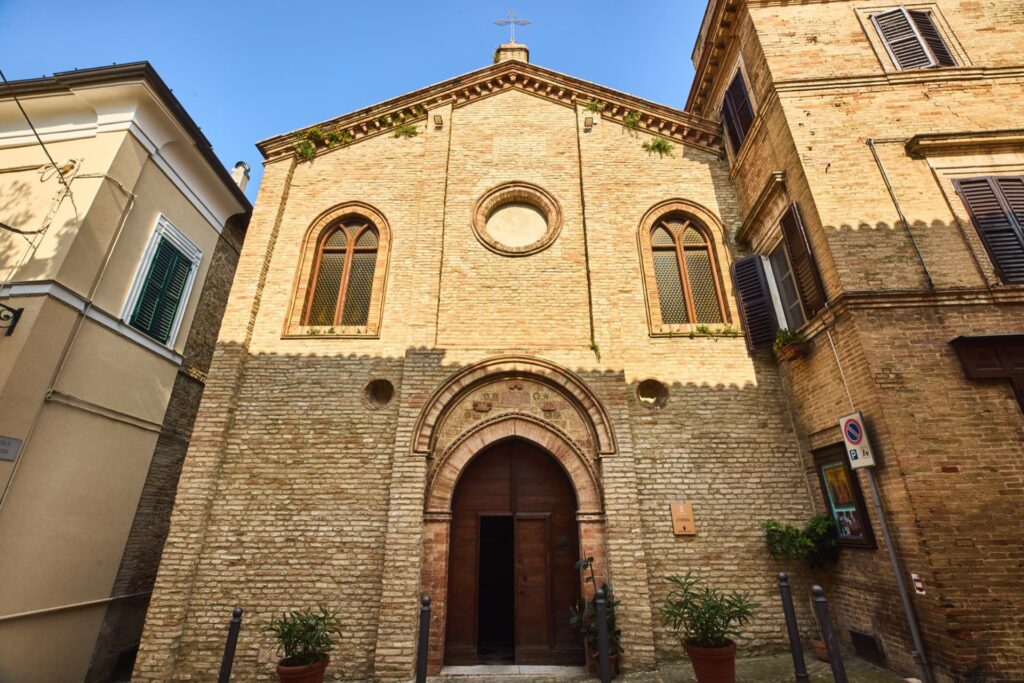
Sanctuary of SS. Crocifisso
The construction of the Sanctuary of the Most Holy Cross dates back to 1333, as indicated by the terracotta inscription on the arch of the Sienese-style portal. The church is extremely ancient and is one of the most distinctive medieval buildings in our diocese.
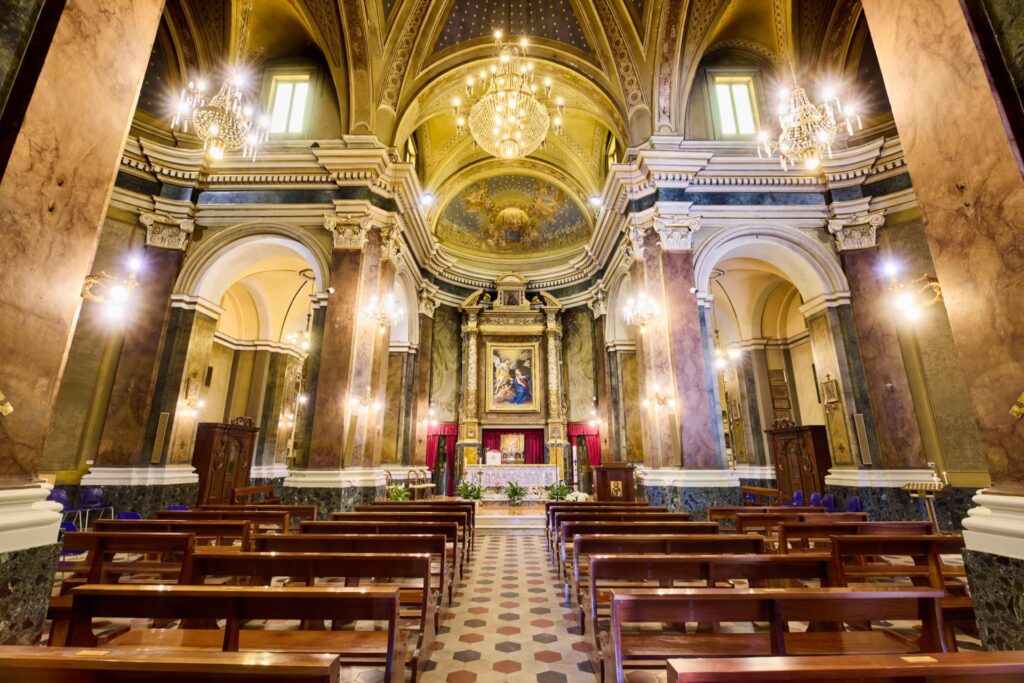
Sanctuary Madonna della Rosa
The Sanctuary of Our Lady of the Rose – situated a short distance from the centre of Ostra, in a valley surrounded by lush hills – has existed since time immemorial as a small shrine where an image of the Virgin, painted on a rough wall, was venerated, with a stream of clear water flowing at its feet. From the vague flower that the Blessed Virgin holds in her left hand, the faithful began to invoke her by the sweet title of ‘Madonna della Rosa’.
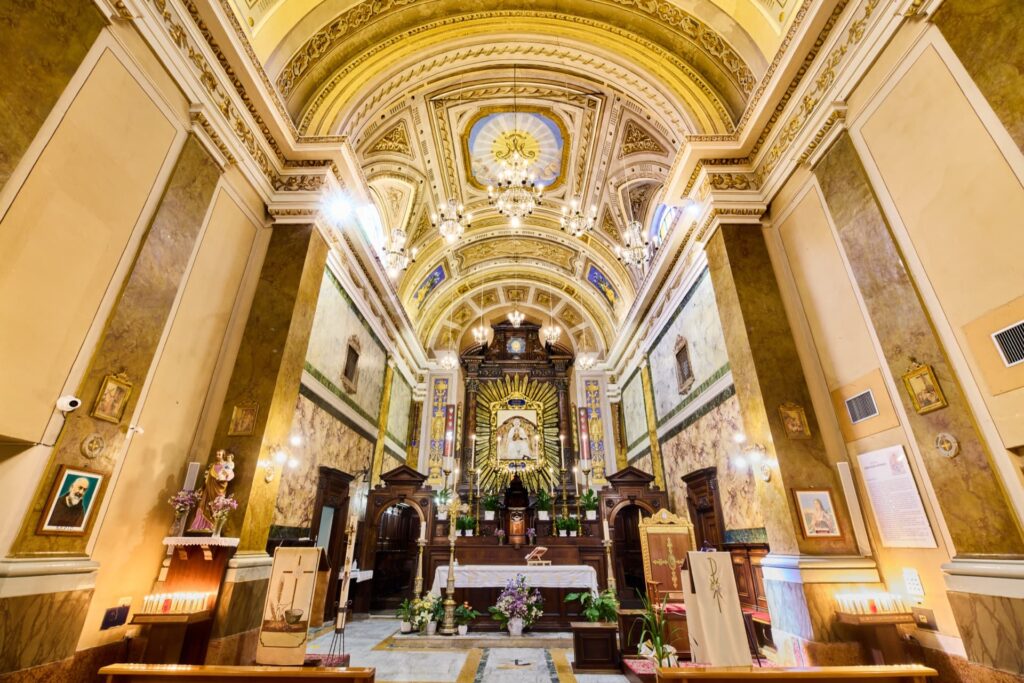
Sanctuary Santa Maria Apparve
The Sanctuary of Santa Maria Apparve was built in 1527 on the site where a simple wayside shrine dedicated to Mary had previously stood. The inscription, set into the façade of the church and written in Latin, states that “In the year 1527, the Virgin Mary, through her own image, promised a young shepherd that she herself would deliver the people of Montalbodo from the plague, if a church were built in honour of her image on the site of the old shrine”.
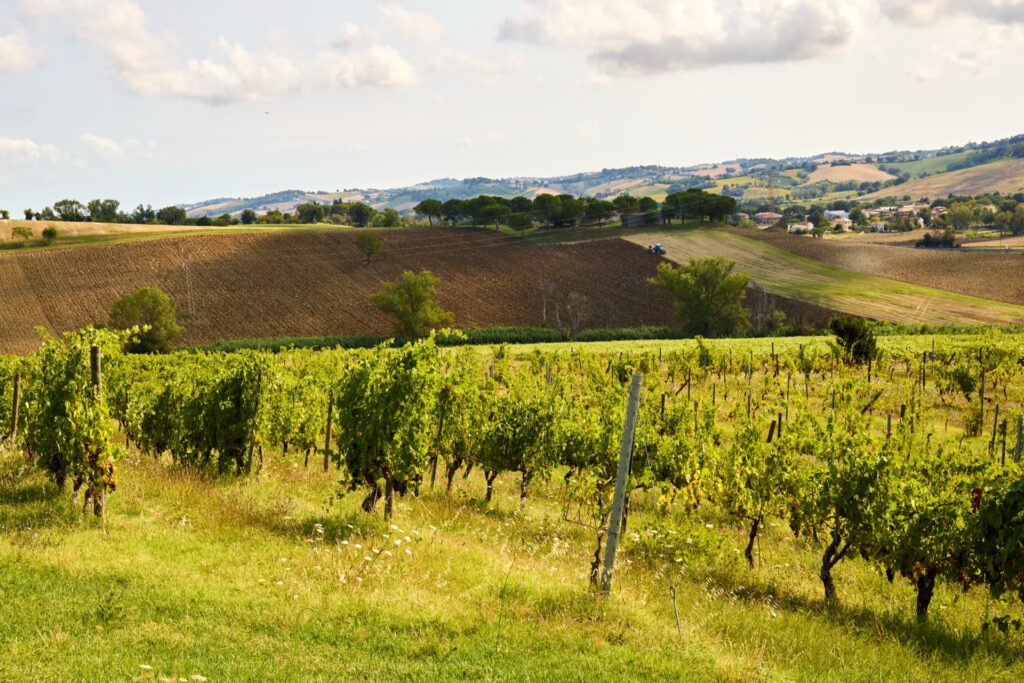
Cellars
For lovers of fine wine, a stop at the Conti di Buscareto winery is a must. This winery has always been committed to preserving and promoting local wine-making traditions. The company produces wines that express the authenticity of the territory, the result of work based on quality, respect for the environment and the excellence of raw materials.
-
Conti di Buscareto
- Tel: 071 7988020
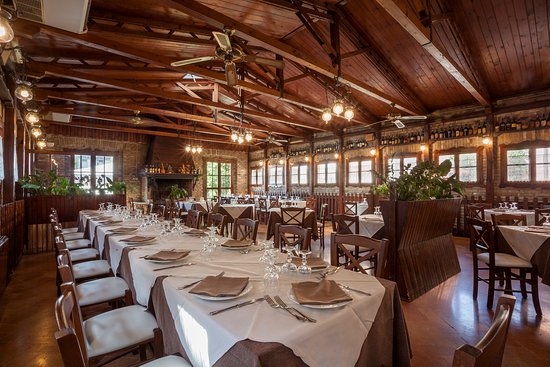
Taste
At the end of, or during, your tour of Ostra, you can sample the culinary delights of the area by choosing one of the recommended restaurants along the route. These include La Cantinella, renowned for its carefully reinterpreted traditional cuisine, and Agriturismo Paradiso, where you can enjoy typical dishes surrounded by the rural landscape of Ostra.
-
Paradiso Farmhouse
Via del Paradiso 10, Ostra , Ancona, 60010 - Tel: 071688314 -
Antica Pasticceria del Corso
Via Antonio Gramsci, 77, 60010 Ostra AN 77, Ostra, Ancona, 60010 - Tel: 071 798 8121 -
Bowling Charlie Pub
Largo Pietro Staccioli 14, Ostra, Ancona, 60010 - Tel: 071 688415 -
Caffè del Teatro
Piazza dei Martiri, 7, 60010 Ostra AN 7, Ostra, Ancona, 60010 - Tel: ---- -
Caffè Mencarelli
Via Po, 2, 60010 Pianello di Ostra AN 2, Ostra, Ancona, 60010 - Tel: 071 973 1825 -
Il Coppetto
Via Coppetto 5, Ostra, Ancona, 60010 - Tel: 0717986942 -
Fori de Porta
Via Antonio Gramsci, 64, 60010 Ostra AN 64, Ostra, Ancona, 60010 - Tel: 334 741 9901 -
GEF bar
via, Largo XXVI luglio, 3, 60010 Ostra AN 3, Ostra, Ancona, 60010 - Tel: 353 410 7093 -
I Veri Sapori
Via Grande Torino 2, Loc. Casine di Ostra , Ancona, 60010 - Tel: ---- -
Il Piazzale
Via Arceviese 55/A, Ostra, Ancona, 60010 - Tel: 071 688 8028 -
La Cantinella
Via Amendola 5, Ostra, Ancona, 60010 - Tel: 07168081 -
La Vittoria Tavern
Via Gramsci 28, Ostra, Ancona, 60010 - Tel: 0717980406 -
Luca Api – dolcerie contemporanee
Via delle Selve, 5, 60010 Casine AN 5, Ostra, Ancona, 60010 - Tel: 071 988 3178 -
Osteria Fuori Porta
Via Riviera di Levante 36/37, Ostra , Ancona, 60010 - Tel: 0717957801 -
Pastry shop Golosamente
Largo Marina, 69, 60010 Ostra AN 69, Ostra, Ancona, 60010 - Tel: 348 867 3702 -
Pizzeria Tranquilli
Via Aristide Merloni 6, Loc. Casine di Ostra - zona industriale, Ancona, 60010 - Tel: ---- -
Da Galià Tavern
Via Vaccarile 1, Ostra, Ancona, 60010 - Tel: 0717986926 -
Bakery Fratelli Fabbri
Via Ghiretto 5, Ostra, Ancona, 60010 - Tel: 0716888039
Shopping - Ostra
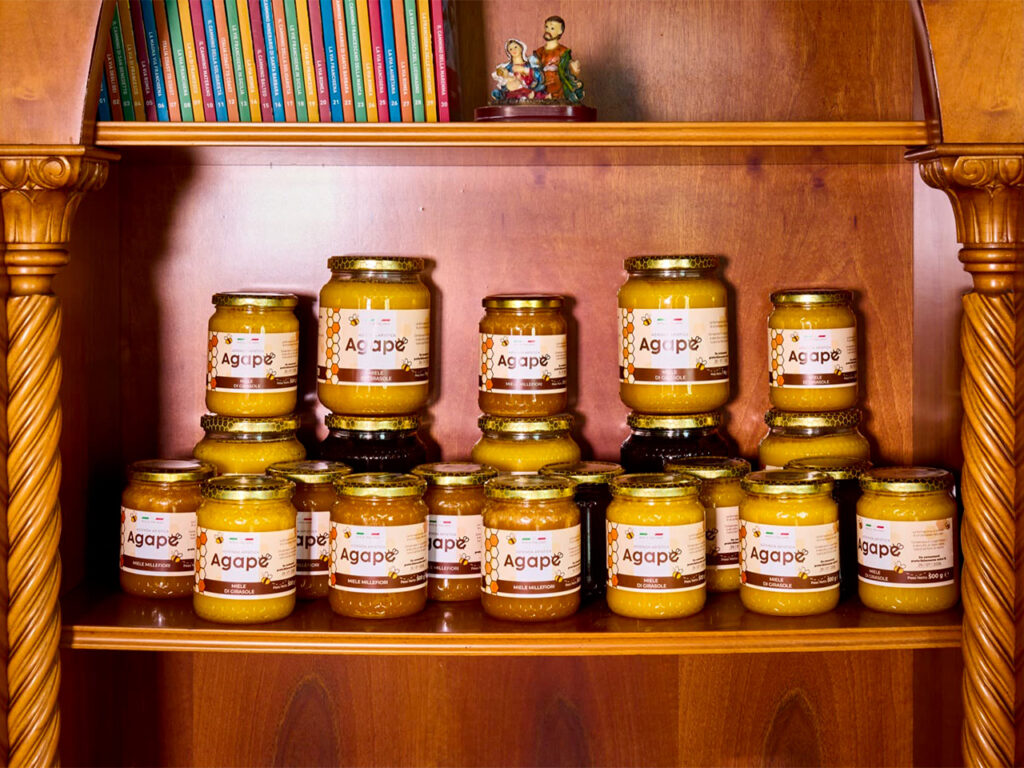
At the end of the visit, you can treat yourself to a spot of shopping, choosing from a selection of notable local businesses. For those who love sustainable fashion, the ethical and original garments by Gaia Segattini Knotwear represent the excellence of the region; while for lovers of authentic Marche flavors, the products of Salumificio Valmisa are unmissable, perfect to take home with you as a tasty souvenir of your experience in Ostra.
-
Agape Beekeeping Company
Via G. Amendola, 60010 Ostra AN - Tel: 3341111701 -
Gaia Segattini Knotwear
Via dell'Artigianato, 10, 60010 Casine AN - Tel: 3513868043 -
Mansanta Farm
Via Riviera di Levante, 38, 60010 Ostra AN - Tel: 339 328 7980 -
Salumificio Valmisa
Zona Z.I.P.A., Via A. Merloni, 60010 Casine AN - Tel: 071 688058
Other Information
Categories
Itinerario
Ostra 4.0: Presente Digitale per un Futuro Connesso - CUP I91C24000210002 - Questo intervento è stato realizzato con il contributo di 45.000€ dell’Unione europea Bando POR FESR Marche 2021-2027 - Asse 1 - Azione 1.2.2 - Int. 1.2.2.2 Bando per “Servizi digitali integrati”



