

Town Hall
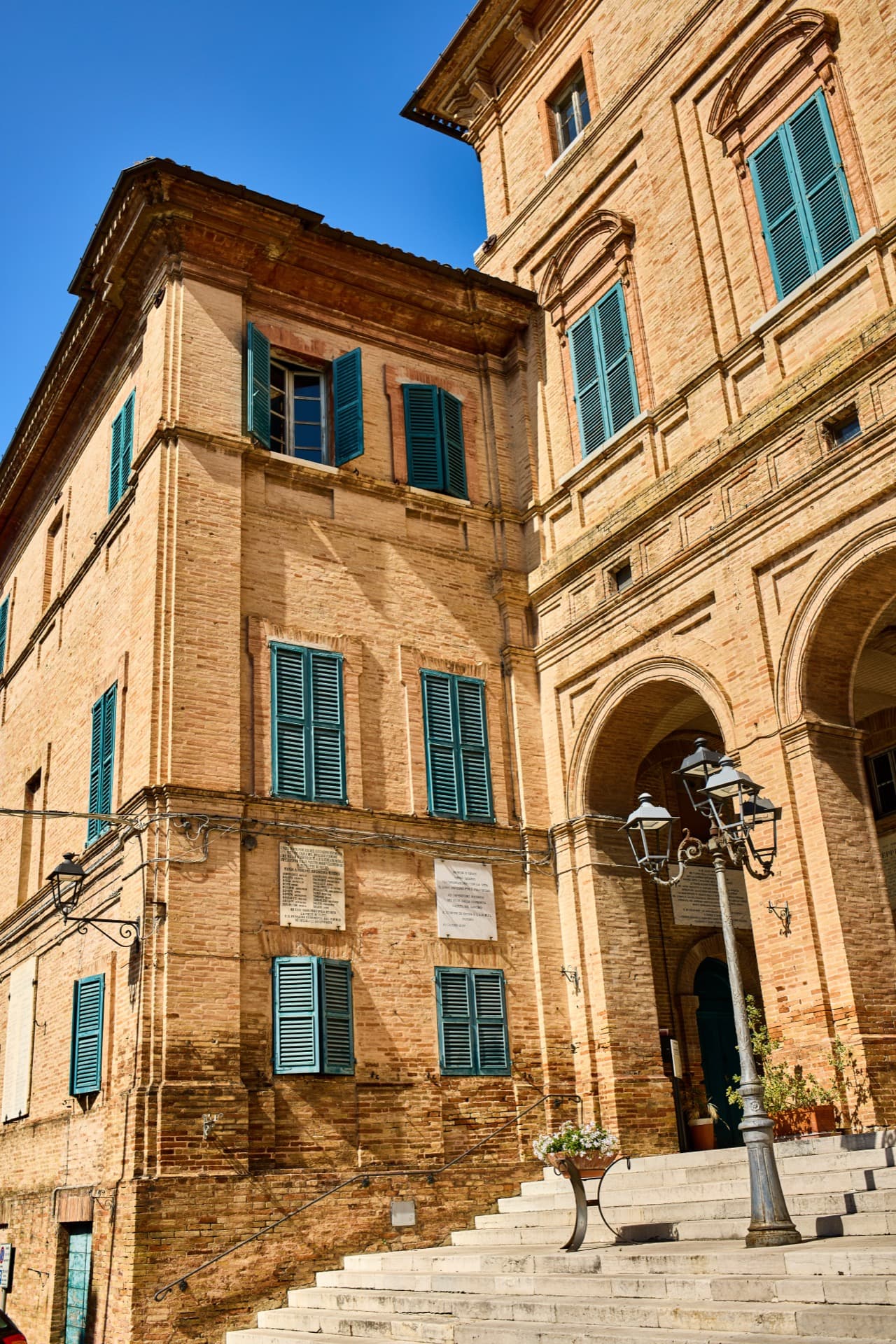
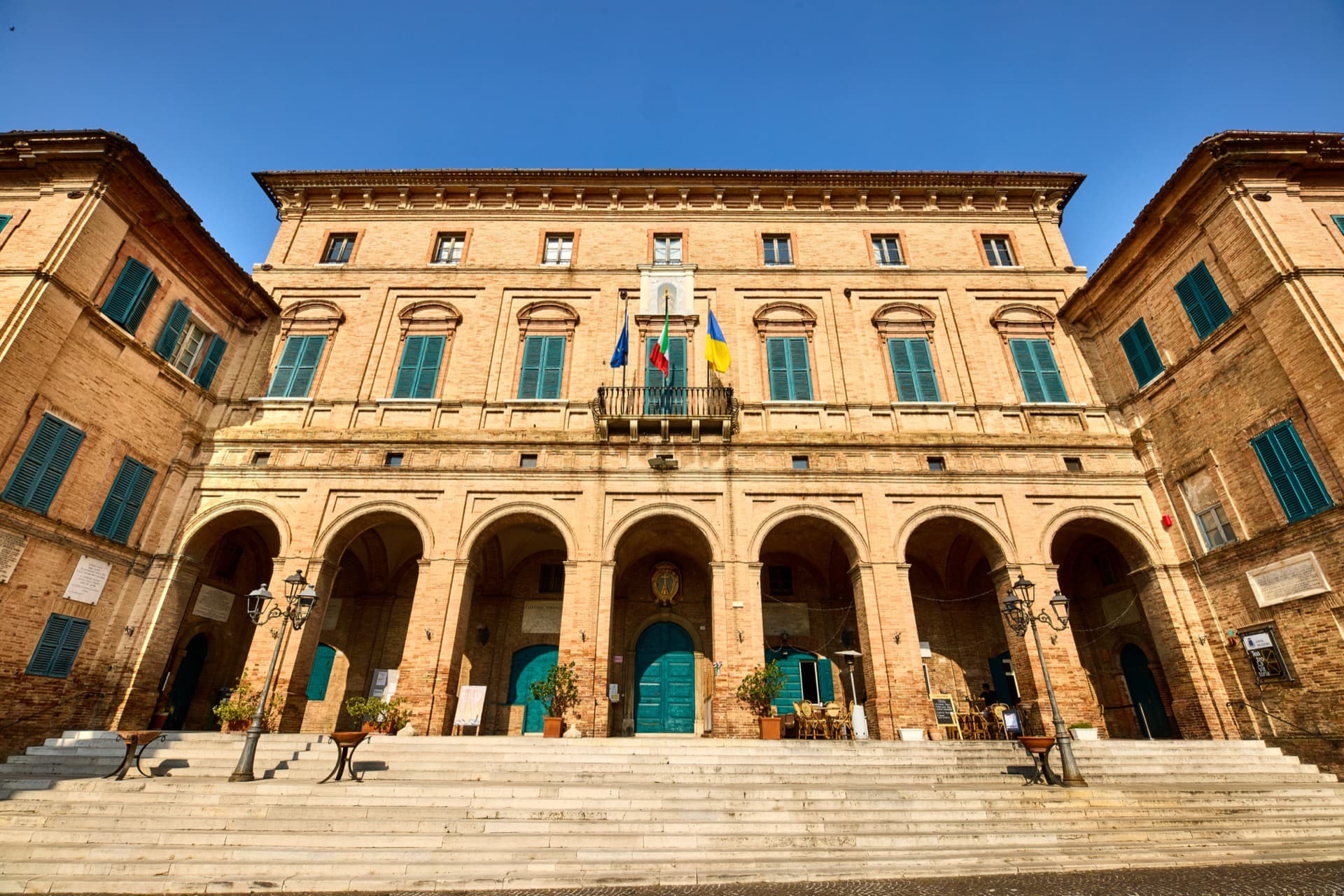
The Town Hall, designed by architect Antonio Maria Carbonari Geminiani, dominates the square it overlooks. The harmonious architecture composed of a central body and two lateral ones is enriched by a loggia with seven round arches.
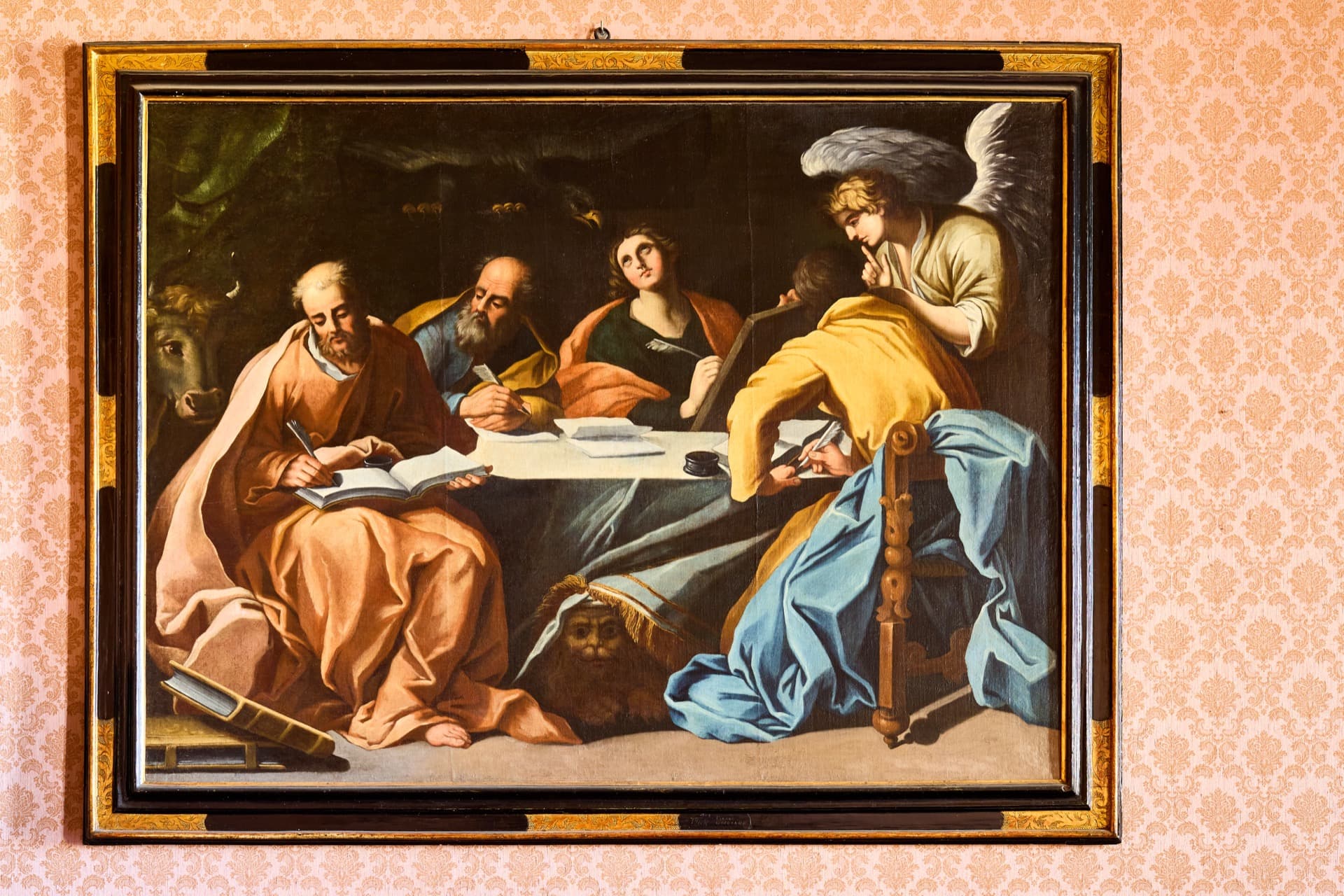
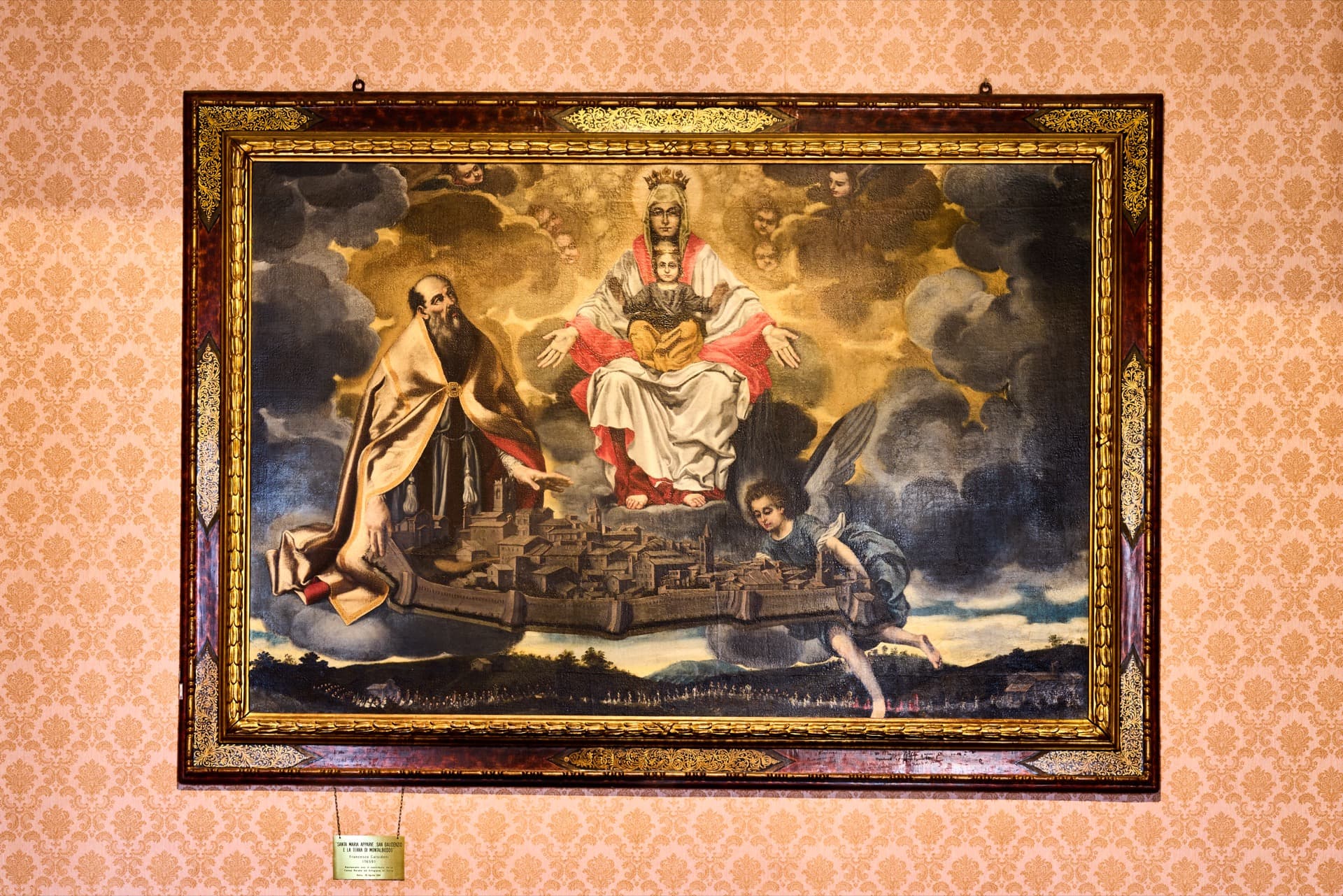
In 1735 the need began to be felt to replace the old and no longer functional priory palace with a new building. Seven years later, the City General Council approved the construction of the new building, which was designed by architect Antonio Maria Carbonari Geminiani. Demolition work on the previous building and construction of the new one began in 1749 and continued for approximately forty years. The elegant and beautiful building with its projecting wings and recessed central body dominates the square it overlooks. The harmonious architecture is enriched by a loggia with seven round arches accessed via a staircase. Inside is a collection of portraits of illustrious men, along with three other canvases, preserved in the Council Chamber, including the painting, the work of Carsidoni, offered by the Administration and the citizens to their two co-patrons, Saint Gaudenzio and the Virgin Mary, venerated under the title of Santa Maria Apparve. The canvas is particularly dear to the city for the pictorial testimonies it bears: the urban structure of Montalboddo in the 17th century, the original façade of the church of San Rocco, with the portal surmounted by a tympanum, and the liveries of the confraternities then active in the municipal territory. Inside, you can visit three rooms: the first room is the largest, used for celebrations, events, and conferences. Upon entering, at the top left, you can see the painting depicting Cardinal Nicola Antonelli. Second room: it is the city council chamber, as you can see, completely decorated with paintings and frescoes, still visible on the ceiling and covered on the walls. There are three paintings in the room. Turning our backs to the window, in front of us we find the painting depicting St. Gaudentius, patron saint of Ostra, S. Maria Apparve and S. Michael the Archangel holding Ostra, suspended in the air. In the painting on the right we have the four evangelists, while the one on the left portrays the Last Supper. It must be said that these last two paintings were commissioned specifically for this room. Third room: it is called the “yellow room” and is where civil weddings are celebrated. The walls and ceiling are entirely frescoed, while entering on the right we have a large portrait of Pope Pius VI, in memory of the granting of the title of City to Ostra in 1790. The white marble fireplace and the furniture, which dates back to the early ’800s, are very beautiful. Since in the past this room was used as a waiting area for noble families going to the theatre, the two doors connecting the room and the theatre’s gallery remain evidence of this use, although currently the rooms are separate from the theatre.
Gallery
Multimedia
PALAZZO COMUNALE - Extern
PALAZZO COMUNALE -Council Chamber ENG
PALAZZO COMUNALE - Portrait Collection ENG
Where
Scan the QR code
To reach the point of interest
Piazza dei Martiri 5
Distance by car: 22 min RaggiungiContacts
Address
Piazza dei Martiri 5
Other Information
Categories
Storico
You might also be interested
Ostra 4.0: Presente Digitale per un Futuro Connesso - Questo intervento è stato realizzato con il contributo dell’Unione europea Bando POR FESR Marche 2021-2027 - Asse 1 - Azione 1.2.2 - Int. 1.2.2.2 Bando per “Servizi digitali integrati”



